By Rajender Prasad • June 1, 2026
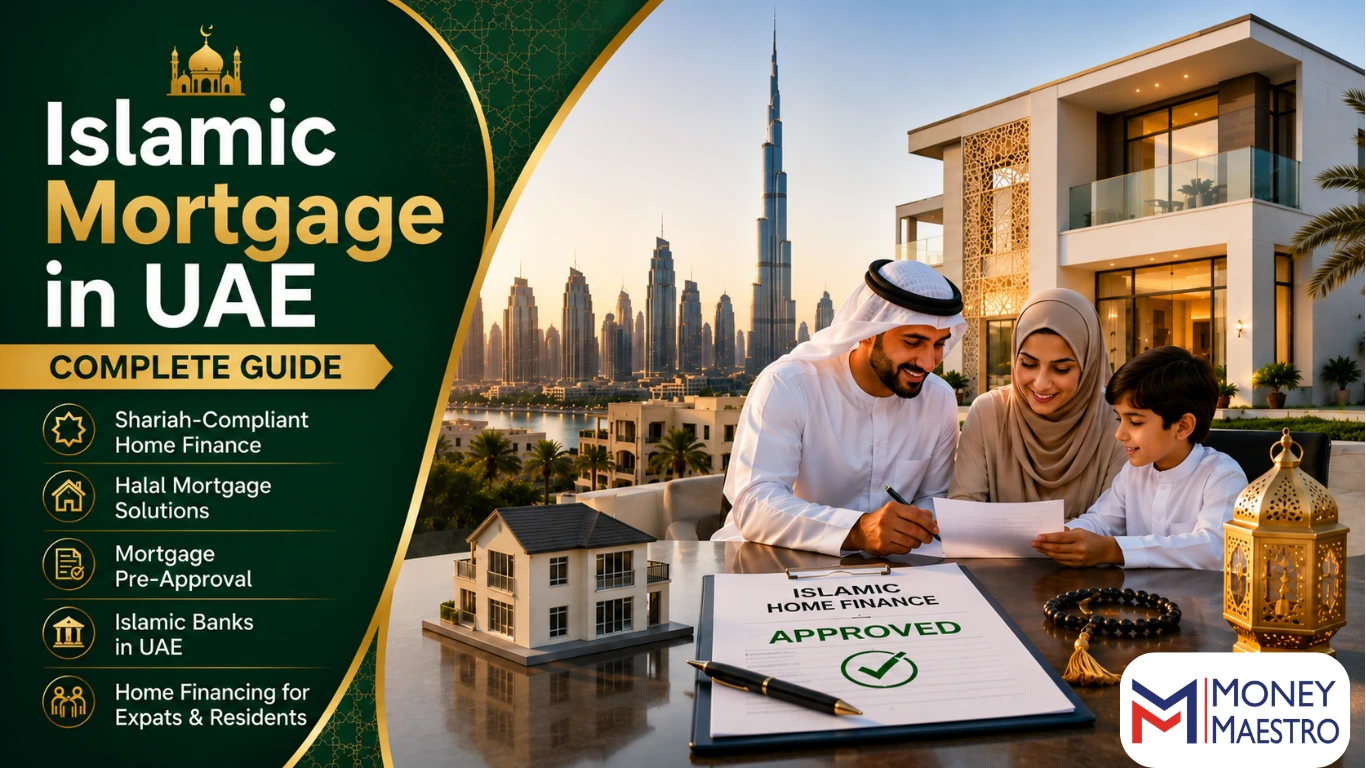
The UAE has become one of the world’s leading destinations for Islamic banking and Shariah-compliant financial solutions. For Muslim home buyers who wish to purchase property without conventional interest-based loans, an Islamic Mortgage in UAE offers a halal and ethical financing alternative.
Whether you are buying your first home, investing in Dubai real estate, or refinancing an existing property, understanding how a Halal Mortgage works can help you make the right financial decision.
This complete guide explains everything about Shariah-Compliant Home Finance in the UAE, including how it works, types of Islamic mortgages, eligibility, benefits, required documents, and how a mortgage broker can help you secure the best financing solution.
What is an Islamic Mortgage?
An Islamic Mortgage is a Shariah-compliant home finance solution designed according to Islamic banking principles. Unlike conventional mortgages that charge interest (Riba), Islamic banks structure property financing using profit-sharing, leasing, or partnership models approved under Islamic law.
In a Halal Mortgage, the bank and customer enter into a Shariah-approved agreement where:
- The bank purchases the property
- The customer repays the amount through agreed installments
- Profit is earned through trade or leasing structures instead of interest
Islamic mortgages are widely available across UAE banks and Islamic financial institutions.
Why Islamic Mortgage is Popular in UAE?
The demand for Islamic Mortgage in UAE continues to grow because many buyers prefer financing options aligned with Islamic values.
Major reasons include:
- Interest-free financing structure
- Shariah compliance
- Ethical financial practices
- Transparent agreements
- Competitive profit rates
- Flexible repayment options
Today, many UAE residents and overseas investors choose Shariah-Compliant Home Finance for both residential and investment properties.
How Islamic Mortgage Works in UAE?
Islamic banks use different financing models approved by Shariah scholars.
The most common structures include:
1. Murabaha (Cost-Plus Financing)
Under Murabaha:
- The bank buys the property
- The property is sold to the buyer at a pre-agreed profit margin
- The customer repays in monthly installments
The total payment amount is fixed and transparent from the beginning.
2. Ijara (Lease-to-Own)
Ijara is one of the most popular forms of Halal Mortgage in UAE.
In this structure:
- The bank purchases the property
- The customer leases the property from the bank
- Monthly payments include rent and ownership contribution
- Ownership gradually transfers to the buyer
This model is commonly used for villas and apartments in Dubai and Abu Dhabi.
3. Diminishing Musharaka
This is a partnership-based financing structure.
In Diminishing Musharaka:
- The buyer and bank jointly purchase the property
- The buyer gradually purchases the bank’s share over time
- Monthly installments reduce the bank’s ownership portion
This method is widely accepted as one of the most authentic Islamic home financing solutions.
Difference Between Islamic Mortgage and Conventional Mortgage
| Islamic Mortgage | Conventional Mortgage |
|---|---|
| Shariah-compliant | Interest-based |
| No Riba (interest) | Interest charged |
| Asset-backed financing | Loan-based financing |
| Profit-sharing structure | Interest repayment structure |
| Ethical investment principles | Standard banking model |
Although monthly installments may appear similar, the legal and financial structure differs significantly.
Benefits of Shariah-Compliant Home Finance
Religious Compliance
The biggest advantage is compliance with Islamic principles.
Transparent Agreements
Islamic banks provide clear financing terms without hidden interest structures.
Competitive Profit Rates
Many Islamic mortgages offer rates comparable to conventional home loans.
Flexible Repayment Options
Buyers can choose fixed or variable profit structures.
Suitable for Expats and Residents
Islamic Mortgage in UAE is available for:
- UAE residents
- Expats
- Self-employed individuals
- Overseas investors
Eligibility for Islamic Mortgage in UAE
Eligibility criteria may vary between banks, but common requirements include:
For Salaried Individuals
- Minimum salary requirement
- Stable employment
- Good credit history
- UAE residency visa and Emirates ID
For Self-Employed Applicants
- Active trade license
- Business operational history
- Audited financial statements
- Bank statements
For Non-Residents
Some banks also provide Halal Mortgage options for overseas property buyers.
Documents Required for Islamic Mortgage
Typical documents include:
Salaried Applicants
- Passport copy
- Emirates ID
- Visa copy
- Salary certificate
- Last 6 months bank statements
Self-Employed Applicants
- Trade license
- Company bank statements
- Audited financials
- MOA documents
Non-Residents
- Passport
- Overseas income proof
- Bank statements
- Credit history documents
Down Payment for Islamic Mortgage in UAE
According to UAE Central Bank guidelines:
| Property Value | UAE Residents | Non-Residents |
|---|---|---|
| Up to AED 5 Million | 20% | 40% |
| Above AED 5 Million | 30% | 40% |
Additional charges may include:
- Dubai Land Department fees
- Property valuation charges
- Mortgage registration fees
- Bank processing fees
Islamic Mortgage for Ready-to-Move Properties
Many buyers choose Islamic Mortgage solutions for:
- Ready apartments
- Villas
- Townhouses
- Luxury properties
- Investment properties
Banks generally prefer completed properties because valuation and ownership transfer are straightforward.
Islamic Mortgage for Off-Plan & Handover Properties
Several Islamic banks in UAE also offer:
- Mortgage for handover properties
- Islamic finance for off-plan projects
- Home finance for newly completed apartments
This helps buyers transition from developer payment plans to long-term Shariah-compliant financing.
Mortgage Pre-Approval for Islamic Home Finance
Before searching for property, buyers should obtain mortgage pre-approval.
Mortgage pre-approval helps determine:
- Eligible financing amount
- Estimated monthly installment
- Profit rate
- Maximum budget
Benefits of mortgage pre-approval:
- Faster property transactions
- Better negotiation power
- Improved approval chances
- Clear financial planning
Working with a mortgage broker can simplify the pre-approval process across multiple UAE banks.
Best Islamic Banks for Home Finance in UAE
Several leading UAE banks provide Shariah-Compliant Home Finance solutions, including:
- Dubai Islamic Bank
- Abu Dhabi Islamic Bank
- Emirates Islamic
- Sharjah Islamic Bank
- Ajman Bank
Each bank offers different:
- Profit rates
- Processing fees
- Eligibility requirements
- Loan tenures
Comparing multiple lenders is important before finalizing a mortgage.
How a Mortgage Broker Helps with Islamic Mortgage
A professional mortgage broker helps buyers:
- Compare Islamic mortgage options
- Get faster mortgage pre-approval
- Understand Shariah financing structures
- Negotiate competitive rates
- Manage documentation
- Simplify bank approvals
Instead of applying separately to different banks, a mortgage broker can streamline the entire process.
Common Mistakes to Avoid
Not Comparing Islamic Banks
Different banks offer different profit rates and structures.
Ignoring Additional Costs
Always budget for registration and processing fees.
Applying Without Pre-Approval
Mortgage pre-approval improves transaction speed and confidence.
Choosing Based Only on Monthly EMI
Understand the full financing structure and total repayment amount.
Why Choose Money Maestro for Islamic Mortgage in UAE?
Money Maestro helps home buyers secure the right Islamic Mortgage solutions across Dubai and the UAE.
Money Maestro assists clients with:
- Halal Mortgage solutions
- Shariah-Compliant Home Finance
- Mortgage pre-approval
- Mortgage for handover properties
- Mortgage for new apartments
- Refinancing solutions
- First-time home buyer financing
The team compares multiple banks and helps clients secure competitive financing with a smooth approval process.
Final Thoughts
An Islamic Mortgage in UAE provides an ethical and Shariah-compliant path to home ownership. Whether you are buying a ready property, investing in Dubai real estate, or refinancing your current property, choosing the right Halal Mortgage solution is essential for long-term financial stability.
Before applying, compare banks carefully, obtain mortgage pre-approval, and work with an experienced mortgage broker who understands Islamic home finance structures.
With the right guidance, buyers can secure a Shariah-Compliant Home Finance solution that aligns with both their financial and religious goals.