By Rajender Prasad • December 16, 2025
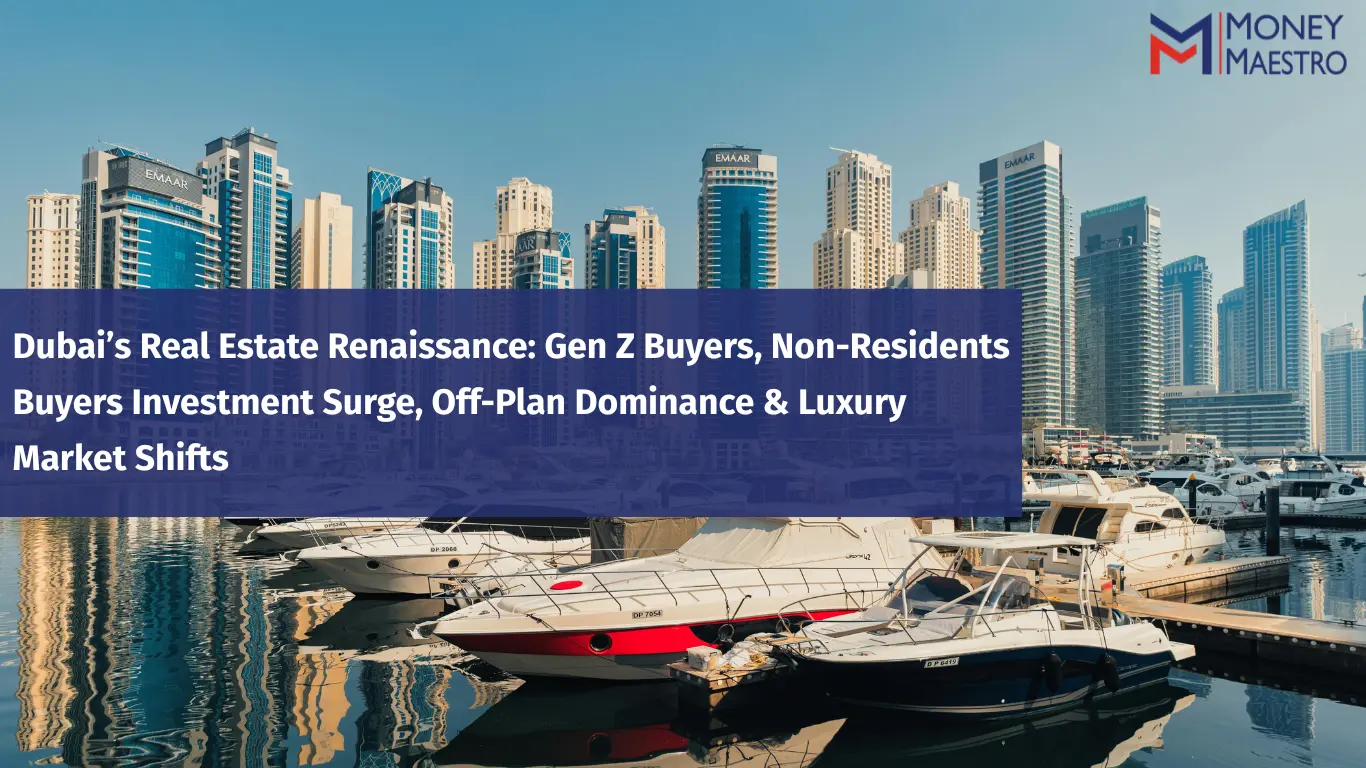
Dubai’s real estate market has entered a powerful new growth phase, positioning itself as one of the world’s most resilient and future-ready property ecosystems. As the emirate moves toward 2026, it continues to defy global economic headwinds while reshaping buyer demographics, transaction dynamics, and luxury-market behavior.
Driven by Gen Z investors, rising Non-residents buyers participation, off-plan property dominance, and luxury renovation trends, Dubai’s property sector reflects a deeper transformation rather than a short-term boom.
A New Generation of Global Property Investors: Rise of Gen Z Buyers
One of the most defining shifts in Dubai’s real estate landscape is the emergence of young, affluent Indian Gen Z buyers. Typically aged between their mid-20s and early 30s, these globally mobile professionals are increasingly choosing Dubai over traditional Western real estate markets.
For this cohort, Dubai property represents more than ownership—it is a strategic global asset, lifestyle upgrade, and identity marker. Factors driving this shift include:
- Investor-friendly real estate regulations
- Transparent and efficient buying processes
- Progressive residency reforms (including long-term visas)
- Global connectivity and tax efficiency
Most Gen Z investors begin with 1–2 bedroom apartments in accessible price bands, using real estate as an early wealth-creation tool. These properties offer strong rental yields, long-term appreciation potential, and lifestyle benefits such as residency options and cosmopolitan living.
Digitally native by nature, this buyer segment also fuels demand for AI-enabled property discovery, seamless digital transactions, and flexible payment plans, influencing how developers and brokers structure offerings.
Strong Non-Resindents Buyers Participation Continues to Anchor Market Growth
Alongside Gen Z buyers, Non-Resident Indians (Non-residents buyers) remain a cornerstone of Dubai’s real estate demand. Current estimates suggest that 23–30% of property buyers in Dubai are Non-residents buyers, a significant rise from pre-COVID levels of approximately 18%.
This sustained growth highlights Dubai’s appeal among the Indian diaspora, supported by:
- Freehold property ownership for foreigners
- Clear and stable regulatory frameworks
- Strong rental returns compared to global cities
- Long-term capital appreciation outlook
Leading developers, including Danube Properties, continue to capitalize on this momentum. Their projects often witness rapid sell-outs, reinforcing market confidence and signaling continued investor trust in Dubai’s real estate fundamentals.
Off-Plan Property Sales: The Primary Growth Engine
Off-plan real estate has emerged as the dominant force driving Dubai’s residential market. Throughout 2025, off-plan properties have consistently accounted for over 70% of total residential transactions.
In November alone, off-plan sales contributed nearly Dh 46 billion, underscoring their central role in market expansion. This dominance is fueled by:
- Attractive developer incentives
- Flexible and extended payment plans
- Lower entry prices compared to ready properties
- Confidence in long-term capital appreciation
High demand is especially visible in emerging and master-planned communities, including:
- Dubai South
- Dubai Creek Harbour
- Jumeirah Village Circle (JVC)
- Mohammed Bin Rashid City (MBR City)
These areas continue to attract both end-users and investors seeking early-stage value appreciation.
Record Transaction Volumes and Price Resilience
Dubai’s real estate activity in 2025 has reached historic highs, with transaction volumes consistently outperforming previous years. Industry data confirms that both sales volume and transaction value have grown strongly—despite slower momentum in many global property markets.
Key highlights include:
- Sustained year-on-year growth in apartment sales
- Stable and rising average prices across select periods
- Continued demand for villas and larger homes among families
This price resilience reflects robust demand, investor confidence, and controlled supply absorption, reinforcing Dubai’s reputation as a stable global property market.
Luxury Market Shift: Renovation Over Relocation
A notable evolution is underway in Dubai’s luxury real estate segment. Instead of relocating, high-net-worth homeowners are increasingly choosing to renovate and upgrade existing properties.
This trend is particularly visible in premium locations such as:
- Palm Jumeirah
- Emirates Hills
- Dubai Hills Estate
- Jumeirah Golf Estates
Interior design and construction firms report that renovations now account for up to 40% of their total business, signaling a strategic shift toward value enhancement rather than asset rotation.
Luxury renovations are being viewed as a wealth-optimization strategy, allowing owners to increase property value, customize living spaces, and capitalize on rising valuations without re-entering the market.
The Expanding Renovation Economy
Dubai’s renovation market itself is growing rapidly, supported by:
- Rising luxury home valuations
- Demand for bespoke interiors and lifestyle upgrades
- Increased focus on long-term asset appreciation
Enhanced homes are commanding premium prices, reinforcing the importance of design-led and lifestyle-centric investments within the luxury segment.
Looking Ahead: Dubai Real Estate Outlook for 2026 and Beyond
As Dubai’s property momentum carries into 2026, the market stands on strong fundamentals while remaining mindful of structural balance.
Key growth drivers include:
- Persistent off-plan demand
- Rising international and Non-residents buyers buyer participation
- Continued price stability and appreciation
- Innovation in digital property transactions
At the same time, stakeholders will focus on supply-demand equilibrium, transaction transparency, currency exposure, and sustainable development planning.
Future growth is expected to be supported by community-centric masterplans, lifestyle-driven developments, and smart real estate innovations, including digital title management and AI-powered property platforms.
Conclusion: A Market Defined by Transformation, Not Speculation
Dubai’s real estate market today reflects far more than transactional growth. It represents a structural transformation shaped by global demand, demographic diversification, investor confidence, and evolving buyer ambitions.
From Gen Z wealth creators and established Non-residents buyers investors to off-plan market dominance and luxury value enhancement, Dubai’s property landscape continues to chart a compelling, sustainable trajectory into 2026 and beyond—cementing its status as a global real estate powerhouse.