By Rajender Prasad • September 14, 2026
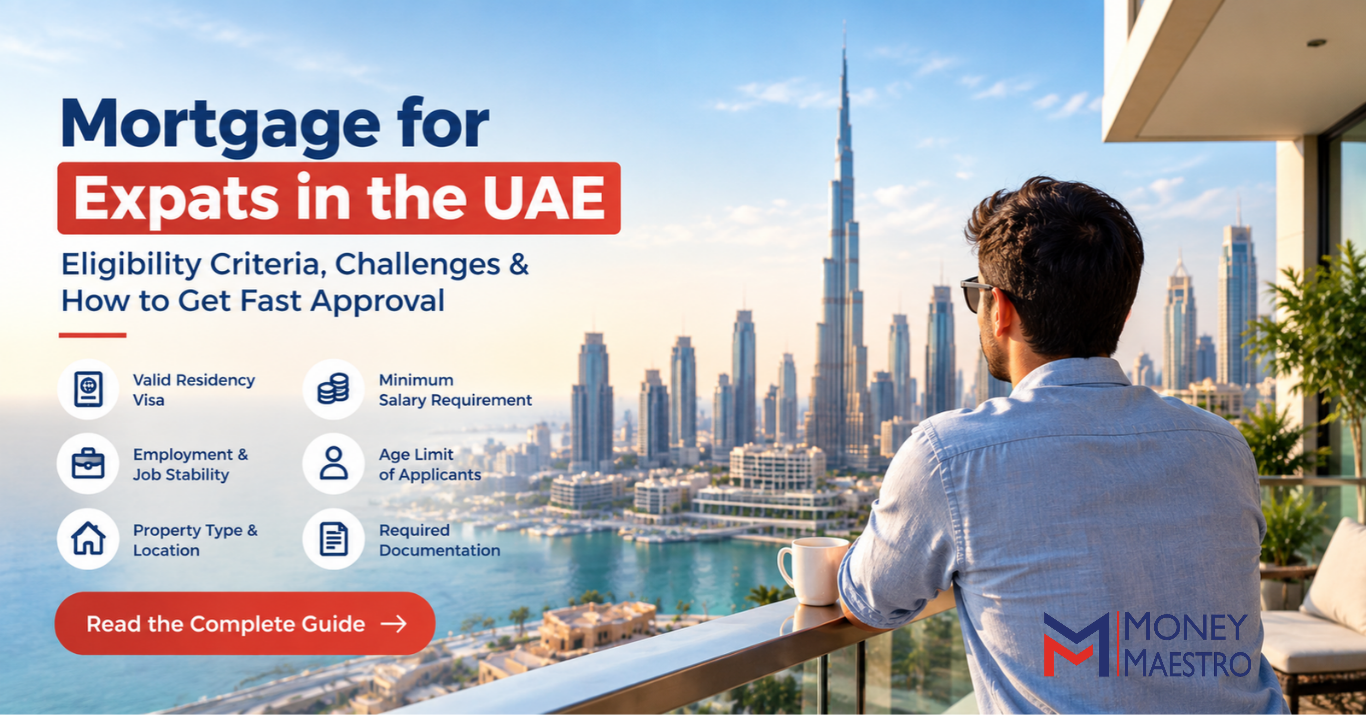
Buying a property as an expat in the UAE is a dream for many, but securing a mortgage can seem challenging without the right guidance. Understanding the eligibility criteria is crucial to streamline the process and increase your chances of fast approval. This is where a reliable mortgage broker can make a huge difference, helping you navigate regulations and find the best UAE home loan options.
In this blog, we’ll cover the key requirements for expats to get a mortgage in the UAE, common challenges, and how to meet them effectively.
1. Valid Residency Visa
To qualify for an expat mortgage, you must have a valid UAE residency visa. Most banks require:
- Minimum of 6 months to 1 year of valid residency
- Proof of residence through Emirates ID or visa page
- Some lenders may require a longer residency period for high-value loans
Without a valid visa, it’s almost impossible to get mortgage approval in the UAE.
2. Minimum Salary Requirement
Banks in the UAE set a minimum income threshold for expat mortgage applicants. Typical requirements include:
- Minimum monthly salary of AED 10,000–15,000 (varies by bank)
- Higher salary thresholds for luxury or off-plan properties
- Some banks allow combining household incomes for eligibility
Meeting the minimum salary requirement ensures that you can service the UAE home loan without stress.
3. Age Limit of Applicants
Most banks have age restrictions for mortgage eligibility:
- Minimum age: 21 years
- Maximum age at loan maturity: 65–70 years
This ensures that borrowers have sufficient income during the repayment period.
4. Employment and Job Stability
Lenders prefer applicants with stable employment. Requirements usually include:
- Full-time employment with a UAE-based company
- Minimum employment period: 6 months to 1 year
- For self-employed expats: proof of business ownership, financial statements, and valid trade license
A mortgage broker can guide self-employed individuals through additional documentation needed for approval.
5. Bank Account and Credit History
A UAE bank account is mandatory, and a good credit history is highly recommended:
- Existing accounts with positive transaction history improve approval chances
- Banks check credit reports via Al Etihad Credit Bureau (AECB)
- Prior defaults or unpaid debts may reduce eligibility or loan amount
Maintaining a clean financial record speeds up the fast approval process.
6. Maximum Loan-to-Value (LTV) Ratio
The LTV ratio defines the maximum loan amount a bank will provide based on the property value:
- For expats: typically 75% of property value for first-time buyers
- 70% or lower for subsequent property purchases
- Off-plan properties may have lower LTV ratios
Your down payment usually covers the remaining percentage.
7. Property Type & Location
Banks assess the property type and location before approving a mortgage:
- Freehold properties in Dubai, Abu Dhabi, or approved emirates are eligible
- Villas, apartments, or townhouses may have different loan limits
- Off-plan properties require developer approval and bank-sanctioned payment plans
A mortgage broker can help you choose a property that meets lender criteria.
8. Required Documentation
To apply for a mortgage as an expat, banks typically require:
- Passport and UAE visa copy
- Emirates ID
- Salary certificate or employment letter
- Bank statements (usually 3–6 months)
- Property documents (if buying an existing property)
- Trade license and financial statements (for self-employed applicants)
Having all documentation ready ensures fast approval.
9. Role of a Mortgage Broker
Navigating these requirements can be overwhelming for expats, especially first-time buyers. A mortgage broker like Money Maestro can help you:
- Assess your eligibility quickly
- Recommend banks with the best offers for your profile
- Handle documentation and liaise with lenders
- Secure a UAE home loan with faster approval
Using a broker increases your chances of securing the best mortgage deal efficiently.
Conclusion
Getting a mortgage as an expat in the UAE requires meeting several eligibility criteria, from residency and income to property type and documentation. By understanding these requirements and leveraging the expertise of a mortgage broker, expats can secure their dream home with confidence and enjoy fast approval.
Whether you’re buying your first home or investing in property, knowing these eligibility rules ensures a smooth and hassle-free mortgage journey.